Osteoporosis: The silent disease that can decide how we age
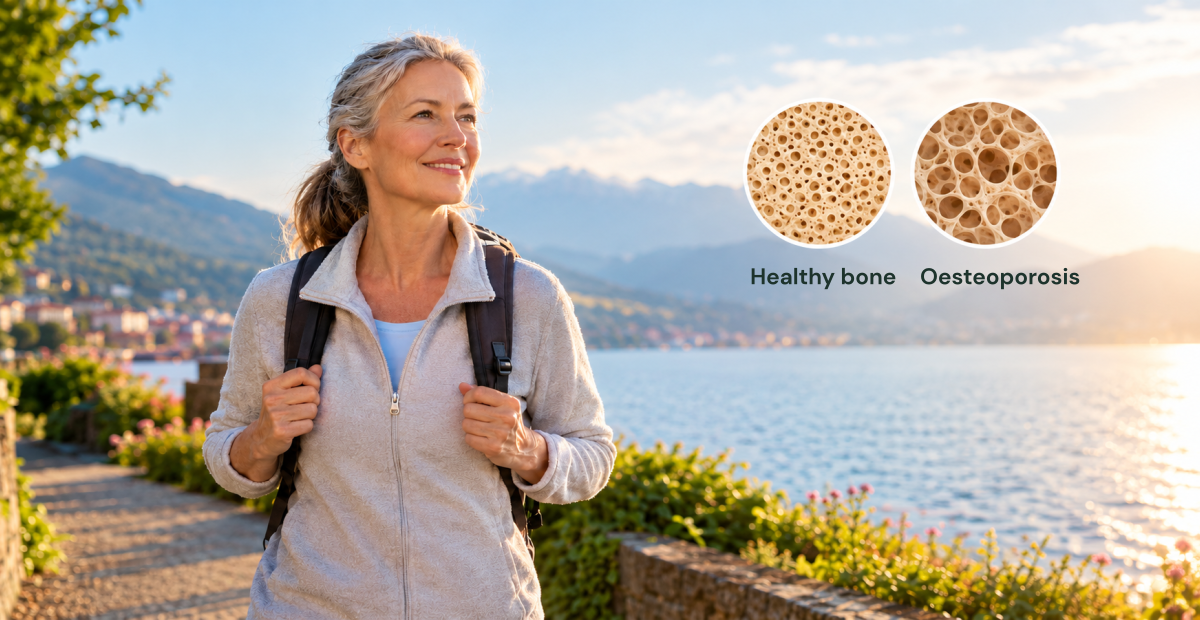
Osteoporosis thins bones silently, often without pain or warning, until an ordinary stumble becomes a life-changing event. A fracture after a minor fall may be a warning sign of underlying bone weakness, not simply bad luck. Most of us want to spend our later years mobile, independent and living in our own homes. Protecting bone health is therefore an important part of protecting our healthspan.
Who is most affected?
Women carry much of the burden. A Swiss study estimated that a 50-year-old woman had a 51.3% remaining lifetime probability of experiencing a major osteoporotic fracture, compared with 20.2% for a man of the same age (Lippuner et al., 2009). These estimates relate to major osteoporotic fractures, including fractures of the hip, spine, wrist and upper arm.
More recent Swiss hospital data reinforce the disproportionate burden among women. Between 2021 and 2023, women accounted for 70% of hip fractures and 74% of non-hip, non-vertebral fractures in the study population (Everts-Graber et al., 2026).
Biology plays an important role. Oestrogen helps maintain bone density, and its decline during menopause accelerates bone loss. However, osteoporosis risk is influenced by many factors throughout life, including ageing, body weight, nutrition, physical activity, medical conditions and certain medications (Morin et al., 2025).
Men are not spared. Although osteoporosis is often associated with women after menopause, men also experience fragility fractures and can develop serious complications. Both men and women should be assessed when their age, medical history or other risk factors indicate an increased risk of fracture (Morin et al., 2025).
Beyond age and sex, Swiss recommendations identify several factors relevant to fracture-risk assessment. These include low body mass index, previous fractures, a parental history of hip fracture, smoking, excessive alcohol consumption, long-term glucocorticoid (steroid) use, rheumatoid arthritis and certain other medical conditions (Ferrari et al., 2020).
Who is most affected?
The uncomfortable truth is that osteoporosis usually develops without obvious symptoms. Bone loss can progress for years without a person knowing that their bones are becoming more fragile. Often, the first clear sign is a fracture (International Osteoporosis Foundation, n.d.).
When signs do appear, they may include:
- Loss of height over time.
- A hunched or stooped posture, which can be associated with fractures in the spine.
- Back pain, particularly when a vertebral fracture has occurred.
- A fracture following a minor fall or an everyday activity that would not normally break a healthy bone.
These symptoms do not prove that someone has osteoporosis, and back pain can have many causes. However, a new fracture, noticeable loss of height or a developing stooped posture deserves medical assessment (International Osteoporosis Foundation, n.d.).
Because symptoms often appear late, knowing your risk factors is especially important. A previous fragility fracture, a family history of hip fracture, early menopause, low body weight or prolonged steroid use are all reasons to discuss bone health with your doctor.
What you can do now:
Bone health is built over a lifetime, and there are practical steps you can take to help protect it at any age.
1. Feed your bones.
A balanced diet with enough calcium, protein and vitamin D supports bone health. Calcium helps maintain bone strength, while vitamin D helps the body absorb calcium. Aim to get these nutrients through a varied diet, and speak to your doctor about whether supplements are appropriate for you (Ferrari et al., 2020).
2. Move, strengthen and improve your balance.
Weight-bearing activity, muscle-strengthening exercises and balance training are important components of bone health and fall prevention. Activities such as walking, dancing and appropriately adapted strength exercises can help maintain mobility and physical function. Exercise should be matched to your ability, especially if you already have osteoporosis or have experienced a fracture (International Osteoporosis Foundation, n.d.).
3. Reduce avoidable risks.
Smoking, excessive alcohol consumption and low body weight are associated with increased fracture risk. Quitting smoking, moderating alcohol consumption, maintaining a healthy weight and eating adequately are practical steps that can support your bones (Ferrari et al., 2020; Morin et al., 2025).
4. Know your risk.
Ask your doctor whether you would benefit from a formal fracture-risk assessment, particularly if you are approaching or past menopause or have other risk factors.
The FRAX tool estimates the probability of a major osteoporotic fracture and a hip fracture over the next 10 years. It considers factors including age, sex, body mass index, previous fractures, parental hip fracture, smoking, alcohol consumption, glucocorticoid use and certain medical conditions. A bone mineral density scan can provide additional information when clinically indicated (Ferrari et al., 2020; Lippuner et al., 2009).
5. Do not ignore a fracture.
A fracture following a minor fall should prompt consideration of underlying bone fragility. Yet a major gap remains between sustaining a fracture and receiving appropriate osteoporosis care.
A Swiss nationwide health claims study covering 2021–2023 found that 88% of hip-fracture patients and 77% of vertebral-fracture patients had not received osteoporosis treatment within six months of their fracture (Everts-Graber et al., 2026).
These findings highlight an important opportunity for prevention. If you or someone close to you experiences a fragility fracture, ask directly: “Could this be related to osteoporosis, and should I be assessed or treated?”
Not everyone who fractures a bone will need the same treatment. However, a fracture should trigger a discussion about bone health, further assessment and measures to reduce the risk of another fracture.
The takeaway
Osteoporosis gives little notice, so the time to act is before the first fracture. Understand your risk factors, nourish your bones, stay active, work on balance and mobility, and take fractures seriously.
Protecting your bones is one of the most practical ways to help preserve your independence and quality of life as you age.
This article is for general information and is not medical advice. Speak to your doctor about your own risk, and before starting supplements.
Key References
- Everts-Graber, J. et al. (2026) ‘Post-fracture care and predictors of anti-osteoporotic treatment in Switzerland: a nationwide health claims analysis’, Osteoporosis International, 37, pp. 691–701. Available at: https://doi.org/10.1007/s00198-025-07832-3 (Accessed: 22 October 2026).
- Ferrari, S., Lippuner, K., Lamy, O. and Meier, C. (2020) ‘2020 recommendations for osteoporosis treatment according to fracture risk from the Swiss Association against Osteoporosis (SVGO)’, Swiss Medical Weekly, 150, article w20352. Available at: https://doi.org/10.4414/smw.2020.20352 (Accessed: 22 October 2026).
- International Osteoporosis Foundation (n.d.) ‘Risk factors’. Available at: https://www.osteoporosis.foundation/patients/about-osteoporosis/risk-factors (Accessed: 22 October 2026).
- Lippuner, K., Johansson, H., Kanis, J.A. and Rizzoli, R. (2009) ‘Remaining lifetime and absolute 10-year probabilities of osteoporotic fracture in Swiss men and women’, Osteoporosis International, 20(7), pp. 1131–1140. Available at: https://doi.org/10.1007/s00198-008-0779-8 (Accessed: 22 October 2026).
- Morin, S.N., Leslie, W.D. and Schousboe, J.T. (2025) ‘Osteoporosis: a review’, JAMA, 334(10), pp. 894–907. Available at: https://doi.org/10.1001/jama.2025.6003 (Accessed: 22 October 2026).