Born to move
Why physical exercise is one of your most powerful allies for a longer, healthier life
There is a simple truth that scientists have known for decades: the single most powerful intervention for how long you live and how well you live costs nothing, requires no prescription, and is available to almost everyone. It is physical exercise.
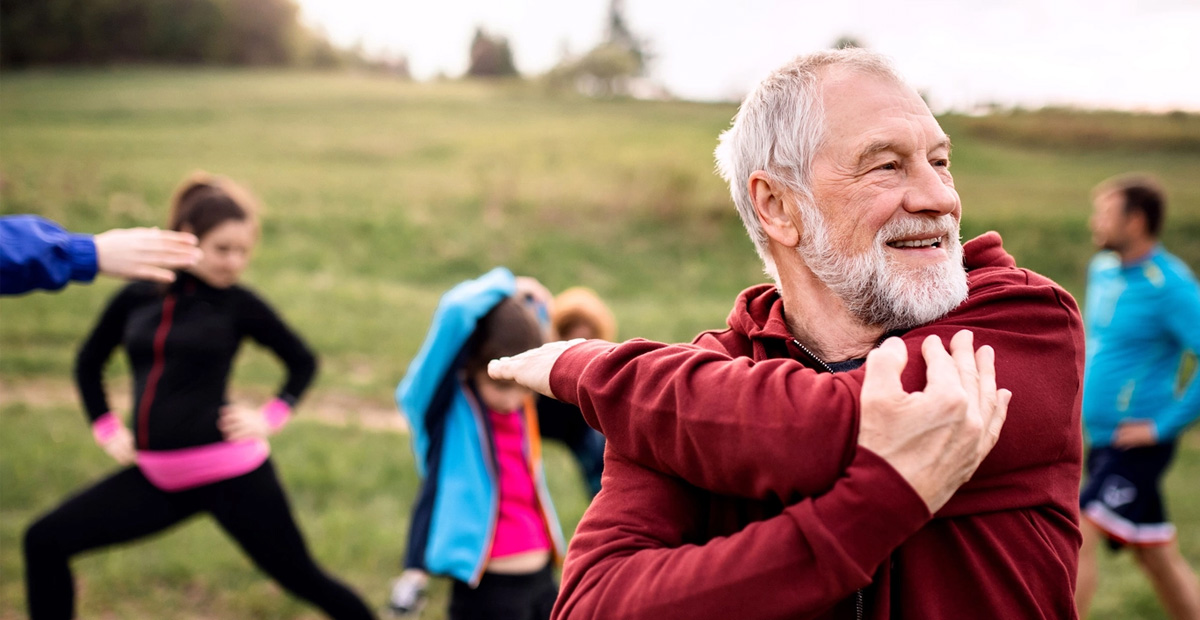
Not the punishing kind. Not the kind that requires a gym membership or a race bib. Just deliberate, consistent, joyful movement and the science behind its effects on healthspan is remarkable.

The body was built to move
Our ancestors moved because life demanded it: foraging, farming, hunting, walking. The human body co-evolved with this constant, varied physical demand. Every organ system, from the cardiovascular to the endocrine to the immune, was calibrated for a life in motion.
When we stop moving, we are withdrawing a signal that our biology depends on. Muscles shrink. Insulin sensitivity drops. Inflammation climbs. Mitochondria, the energy factories in every cell, become sluggish and fewer. Slowly, almost invisibly, the machinery of the body degrades.
From elite performance to everyday longevity
One of the most fascinating frontiers in sports and exercise medicine is the transfer of knowledge from elite athletes to the rest of us. What coaches and physiologists have learned optimising performance in world-class competitors turns out to be deeply relevant to anyone who wants to add healthy years to their life.
For decades, the VO₂ max – the maximum rate at which your body can consume oxygen during intense exercise – was considered a metric for athletes. Today, it is one of the strongest predictors of long-term health we have. A landmark study (Mandsager et al., JAMA Network Open, 2018) found that low cardiorespiratory fitness was associated with a higher risk of mortality than smoking, diabetes, or coronary artery disease. Elite-level VO₂ max was associated with a five-fold reduction in all-cause mortality compared to the least fit group.
The principle at play here is not that everyone needs to train like an olympic athlete. It is that the adaptations produced by structured, progressive exercise – stronger heart, more efficient mitochondria, better blood sugar control, reduced inflammation, improved hormonal signalling – are available to everyone, at every age, with the right dose and the right approach.

The longevity paradox: why less can be more
In longevity-focused fitness, extreme protocols are becoming fashionable: long fasts combined with intense training, ultra-endurance feats, aggressive body-composition goals. Yet, as any sports medicine physician will note, more is not better. The body adapts through stress and recovery; push too hard without rest and adaptation collapses. Chronic overload suppresses immunity, raises cortisol, disrupts sleep, and can even accelerate ageing markers.
The evidence-based sweet spot is a mix of Zone 2 training for roughly 80% of weekly volume and higher-intensity work for the remaining 20% – a polarised model proven to maximise cardiovascular and metabolic gains while reducing injury risk (Seiler, 2010). Add two or more resistance-training sessions per week to preserve muscle, bone, and metabolic health, and you have a protocol any longevity researcher would endorse.

Movement as medicine: the epigenetic story
The most compelling chapter in the movement-healthspan story is written in the genome. Exercise doesn’t just change how the body looks and feels – it changes gene expression. Research shows that regular activity modulates DNA methylation, a key mechanism linking lifestyle to biological age. Methylation-clock studies consistently find that active people are biologically younger than sedentary peers (Marquez et al., 2020): the active body runs newer software on older hardware.
Exercise also supports telomere maintenance, lowers systemic inflammation, and boosts BDNF – the brain-derived neurotrophic factor, which protects and regenerates neurons. The message is simple: move consistently and intelligently, and you send your cells the signals they need to age more slowly.
The healthspan verdict
Movement is the upstream variable that makes every other intervention more effective. It improves sleep quality. It reduces the impact of chronic stress. It sharpens the metabolic response to nutrition. It lowers inflammatory load. It extends the period of biological youth.
People who move regularly live longer in better health, with sharper minds, stronger bodies, and lower rates of virtually every chronic disease. You do not need to become an athlete. You need to stop being sedentary. Treat physical exercise as something your healthspan depends on — because it does.
ABOUT THE EXPERT
Dr Boris Gojanovic
The insights in this article are grounded in exactly the kind of clinical and scientific expertise that Dr Boris Gojanovic brings to Health2Wealth. A Swiss-trained physician specialised in sports and exercise medicine — with full training in internal medicine — Dr Gojanovic has spent his career bridging the world of elite athletic performance and population health. As current President of Sport & Exercise Medicine Switzerland (SEMS), and former Chief Medical Officer at the Swiss National Institute for Sports (Macolin), he has worked at the highest levels of both practice and policy. His research fellowship in performance physiology at Stanford University, combined with his clinical work at Hôpital de La Tour’s Swiss Olympic Medical Center, gives him a uniquely integrated perspective: one that connects the cutting edge of what elite athletes do to optimise performance with what the science says every person can do to extend their healthspan. Whether advising professional sports organisations, governments, corporations, or individuals, Dr Gojanovic’s message is consistent — and it is the message of this article: movement, intelligently dosed and consistently practised, is the most powerful tool we have for a longer, healthier life.